A healed tattoo almost never comes out of the first two weeks looking exactly like the plan, and that is not an accusation against anyone. Skin is a living surface, not paper. One spot holds ink perfectly, another sheds a little during healing, and a small section of line comes back lighter than the rest. In Shelby and everywhere else, this is why touch-ups exist, and why they are a normal, expected part of tattooing rather than a sign that something went wrong.
What clients actually need is a way to judge their healed piece calmly: what counts as a normal touch-up item, what is just a fresh tattoo still settling, and what deserves a call to the shop sooner rather than later.
Why ink settles unevenly
During healing, the top layer of skin renews itself over the ink. Scabbing, even light scabbing, can pull a little pigment with it if it is disturbed. Sun exposure during healing, a spot that stayed too wet under clothing, an area over a joint that flexes constantly: all of these change how a small patch heals compared with its neighbors. Body placement matters too. Hands, feet, elbows, and other high-movement, high-friction areas are famous for losing ink faster than a forearm or shoulder.
The artist's depth and technique matter, of course, but even textbook work heals on real skin with real variables. That is why reputable shops build a touch-up policy into the original work, typically a window after healing during which minor fixes are handled as part of the piece.
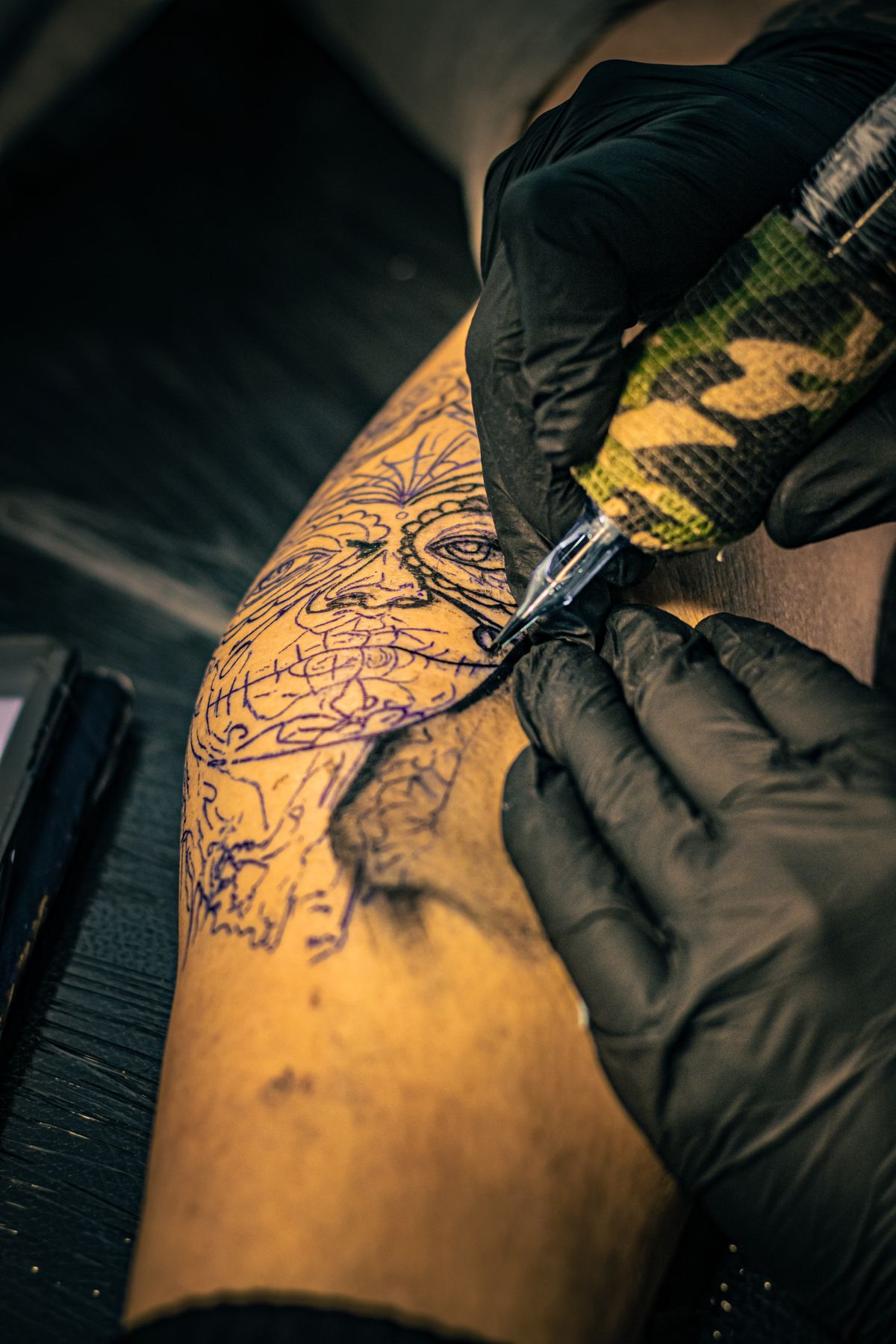
The healed-tattoo checklist
Wait until the tattoo is fully healed before judging anything, which for most people means several weeks, with the surface fully settled and no shine or raised texture left. Then work down this list in good light.
Checking a healed tattoo, in order
- Light patches in solid areas. Pass: color or black is even across filled areas. Touch-up item: a pale or hollow spot inside a filled area, especially where a scab sat during healing.
- Broken or faded line segments. Pass: lines read continuous at arm's length. Touch-up item: a short stretch of line that healed visibly lighter than the same line elsewhere.
- Small blowout or spread. Pass: edges are where they were placed. See the shop: a fuzzy halo around a line can be assessed honestly in person; some spread is normal aging, some is worth correcting early.
- Contrast after settling. Pass: the piece still reads clearly. Touch-up item: grey areas that healed far lighter than intended, flattening the design. Fresh tattoos always look bolder than healed ones, so judge against healed expectations, not day-one photos.
- Spots over joints and friction zones. Pass: ink held at the elbow, ankle, or waistband line. Touch-up item: predictable loss exactly where clothing rubs or skin folds, which artists expect and plan around.
- Anything that looks unwell. Not a touch-up item at all: spreading redness, heat, swelling, or pain after the first days is a health question. Contact the shop and a medical professional promptly rather than waiting for a touch-up window.
The touch-up window, and how to use it
Policies vary by shop, but the common pattern is a defined period, often a few months after the tattoo heals, during which the artist will fix minor healing issues in their own work. The client side of the bargain is aftercare: a tattoo that was picked at, sunburned during healing, or soaked in a pool in week one may fall outside that courtesy, and artists can usually tell.
Booking a touch-up is simple. Wait for full healing, take a clear photo in daylight, and contact the shop while you are inside the window. At Ink Link Tattoos, as at most shops, a touch-up sitting is short compared with the original session. Go in with the photo, point to the specific spots from your checklist, and let the artist judge what is fixable now versus what is normal healed character. A tattoo is expected to look lived-in over the years; a touch-up is for the spots that never got a fair start.

Common questions
Are touch-ups free?
Often, within the shop's stated window, for minor healing issues in the artist's own work. Policies differ, and damage from poor aftercare may not be covered, so ask about the policy before your first session, not after.
How long should I wait before asking for a touch-up?
Until the tattoo is completely healed and settled, usually several weeks at minimum. Judging a tattoo at day ten leads to fixing things that would have settled fine on their own.
Will a touch-up hurt like the original session?
It is the same process on a much smaller area, so most people find it brief and easier. Healed skin that is fully settled takes ink normally.
Photos in this guide are representative stock images.
← All guides from Ink Link Tattoos← Back to Ink Link Tattoos